


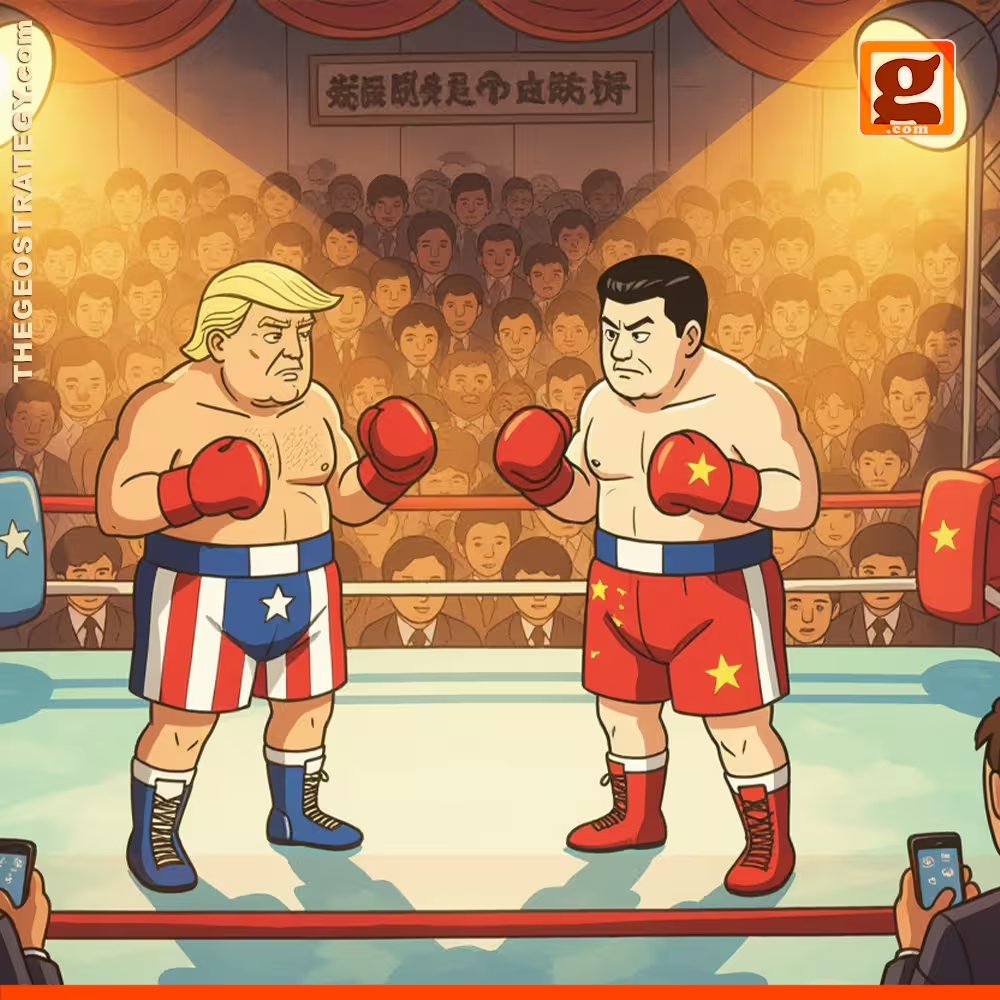

As the world witnessed the meticulously choreographed spectacle of advanced weaponry rolling through Tiananmen Square, a fundamental question hangs in the air: are we observing the confident stride of a new global hegemon, or the anxious projection of a power grappling with its own internal contradictions and external pressures?

“The rapid rise of China as a military power is not only reshaping regional balances, but also challenging the global order maintained by the United States.”
— Dr. Emily Henderson, Senior Fellow, Council on Foreign Relations
The recent Victory Day parade in Beijing was far more than a commemorative event; it was a profound statement of intent, a display of formidable China military power, and a calculated maneuver in the high-stakes chess game of global leadership. This demonstration of might was designed not only for a domestic audience but as a clear signal to Washington and its allies that a new strategic reality is taking shape.
This sentiment of a carefully managed performance, blending genuine capability with strategic messaging, is echoed in the corridors of Western strategic analysis. The pageantry, while impressive, invites a healthy dose of skepticism regarding its immediate operational implications. As one observer noted, the event was a mixture of “politics, propaganda and pageantry.” This assessment, from Tom Karako, Director of the Missile Defense Project at the Center for Strategic and International Studies (CSIS), captures the multifaceted nature of the display. Yet, to dismiss it as mere theater would be a grave miscalculation. From a diplomatic standpoint, such events are a form of communication, a declaration of national will and technological achievement that must be decoded with care. The parade was Beijing’s chosen medium to articulate its vision for a new global order, one where its claim to leadership is backed by hard power that can no longer be ignored. The challenge for international observers and policymakers is to look beyond the spectacle and analyze the substance—the capabilities unveiled, the alliances showcased, and the grand strategy they collectively represent.
A Parade of Power: Unveiling China’s 21st-Century Arsenal
What set this parade apart was not just its scale, but the sophistication of the systems on display, revealing an accelerated innovation cycle that has compressed decades of development into years. This was a clear demonstration of the People’s Liberation Army’s (PLA) shift toward integrated, multi-domain operations, where victory is predicated on dominance in cyberspace and information warfare as much as on traditional land, sea, and air superiority. In diplomatic corridors and intelligence briefings, the focus often shifts from the sheer number of systems to their potential for operational integration and their capacity to disrupt existing strategic balances. The hardware presented in Beijing signaled a significant leap in this direction.

From Hypersonic Missiles to AI Drones: A Technological Leap
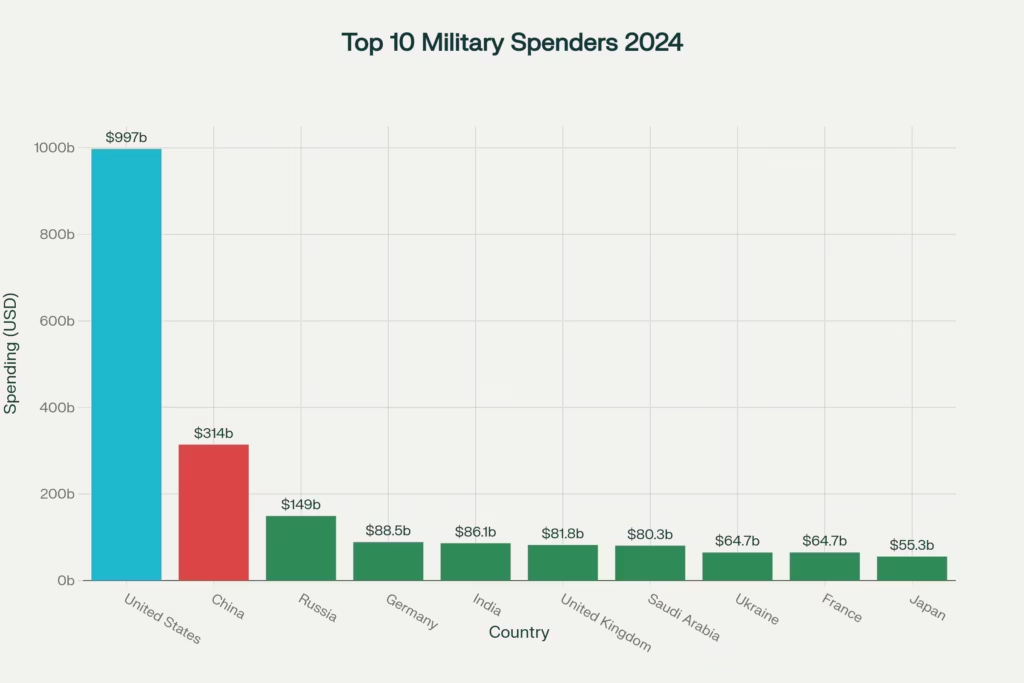
The centerpiece of any major power’s military review is its strategic deterrence capability, and China did not disappoint. The parade featured the complete nuclear triad for the first time, showcasing land, air, and sea-based delivery systems. The debut of the massive Dongfeng-61 (DF-61), a solid-fuel intercontinental ballistic missile (ICBM), sent an unambiguous message about Beijing’s growing global strike capabilities. Alongside it, systems like the HQ-29, described as a “satellite hunter,” highlighted China’s focus on extending conflict into near space, threatening the orbital assets upon which modern militaries, particularly the United States, depend.
Perhaps more strategically significant for regional conflicts were the advancements in autonomous and electronic systems. The sky was filled with a new generation of unmanned aerial vehicles (UAVs), from the stealthy GJ-11 “loyal wingman” drone to large autonomous underwater vehicles (AUVs) designed to threaten aircraft carriers and conduct undersea surveillance. Furthermore, the unveiling of the LY-1 mobile laser air defense system suggests a focus on creating a cost-effective counter to drones and missiles, potentially altering the economics of aerial warfare. This emphasis on what Chinese strategists term “informationisation” and “intelligentisation” reflects a deep study of Western military doctrine and a concerted effort to exploit its perceived vulnerabilities.

The Rise of the Machines: Robot Dogs and the Future of Warfare
Beyond the headline-grabbing missiles, the parade offered a glimpse into a more unsettling future of warfare with the inclusion of four-legged “robotic wolves” and autonomous ground platforms. While their immediate combat effectiveness may be debatable, their presence signifies a profound commitment to integrating robotics and artificial intelligence across all domains of the battlefield. This trend raises complex questions that diplomats and international lawyers are only beginning to grapple with, concerning the laws of armed conflict, the ethics of autonomous targeting, and the potential for rapid, uncontrollable escalation.
The PLA’s new “Four Services + Four Arms” model, which integrates forces from the Aerospace, Cyberspace, and Information Support branches, was on full display, underscoring this shift. The individual soldier’s rifle is now an electronic module, and new tank designs incorporate autonomous turrets. This systematic integration of AI and autonomy is not merely about gaining a tactical edge; it’s about fundamentally changing the character of war itself. It aims to create a battlefield where human decision-making is either augmented or replaced by algorithms, a domain where speed and data processing become the ultimate arbiters of victory.
The New Axis? Forging an Anti-US Alliance
A military parade is as much about the guests in the viewing stands as the hardware on the street. The presence of Russia’s Vladimir Putin and North Korea’s Kim Jong-un, alongside leaders from Cuba and Venezuela, was a deliberate piece of diplomatic stagecraft designed to project the image of a consolidated anti-US coalition. Having observed numerous such summits, the true measure of an alliance is not in the public handshakes but in the quiet bilateral meetings where leverage is candidly discussed and partnerships are stress-tested. This event signaled a clear hierarchy, with Xi Jinping positioned as the undisputed leader of this bloc.
Russia’s New Role: From Partner to Junior Ally
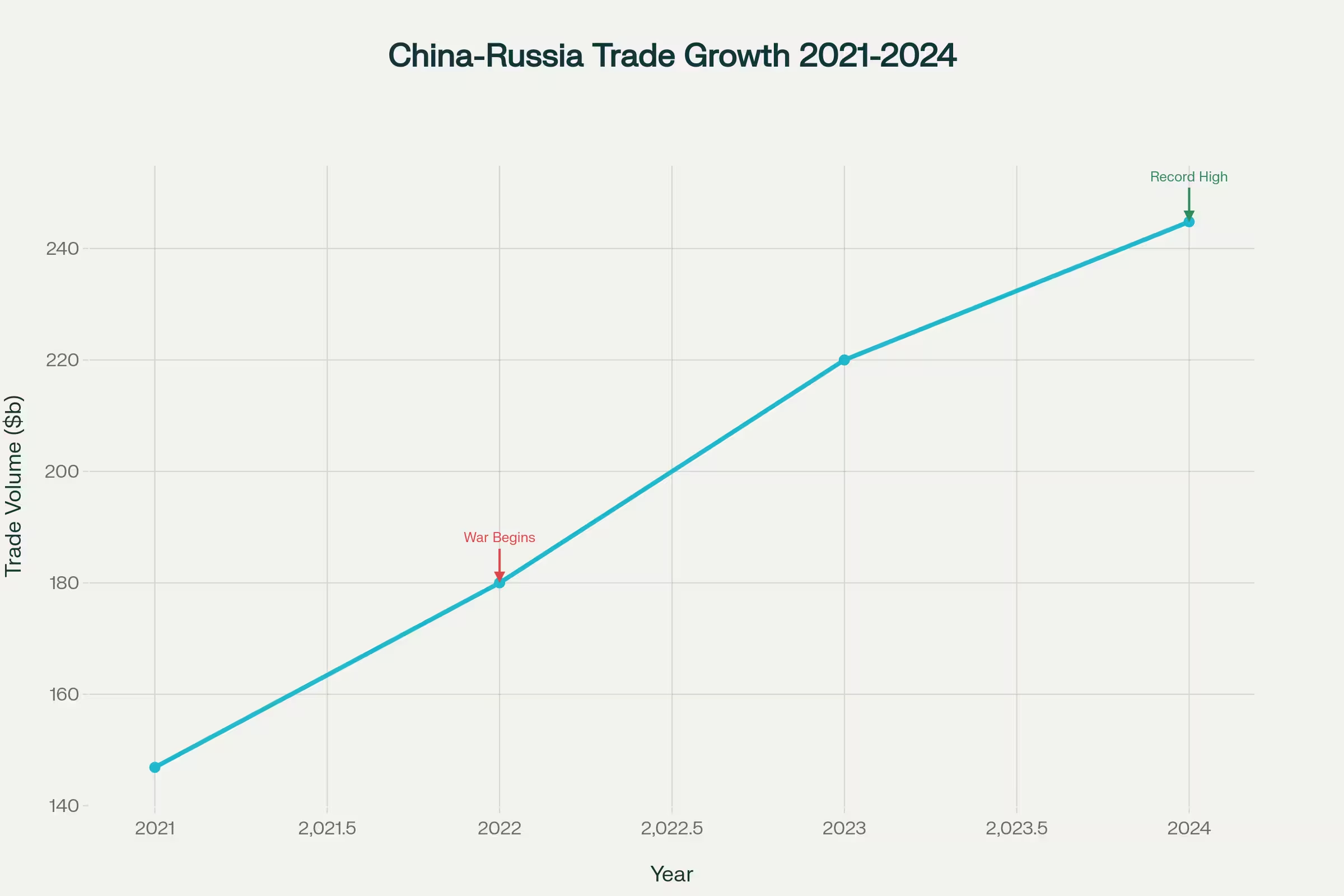
The China Russia alliance has visibly shifted. The war in Ukraine has left Moscow economically weakened and diplomatically isolated from the West, forcing it into a position of greater dependency on Beijing. Russia, once the senior partner in the relationship, now finds itself in the role of a junior ally, a provider of cheap energy and a supporter of China’s geopolitical agenda. The ongoing negotiations over the “Power of Siberia 2” gas pipeline are a case in point, with China holding significant leverage to demand favorable terms. This dynamic is a classic example of realpolitik, where national interests and power imbalances dictate the terms of engagement, regardless of historical ties. For China, a weakened but supportive Russia is a valuable strategic asset, serving as a buffer and a distraction on its western flank while it focuses on the primary theater of competition in the Indo-Pacific.
The “Ambiguous” Guests: What India and Turkey’s Presence Means
More telling, perhaps, was the attendance of leaders from nations with more complex allegiances, such as India’s Narendra Modi and Turkey’s Recep Tayyip Erdoğan, a NATO member. Their presence speaks to a broader trend in global politics: the decline of rigid ideological blocs and the rise of a more fluid, multipolar, and transactional international system. India, a member of the BRICS forum, maintains a deeply antagonistic relationship with China, marked by persistent border disputes and Beijing’s staunch support for Pakistan. Yet, its relations with the United States have also been strained by trade disputes and differing approaches to Russia.
India’s participation is an exercise in strategic ambiguity, a hallmark of its foreign policy designed to maximize its autonomy by engaging with all major powers without being beholden to any. Similarly, Turkey’s presence highlights the growing fractures within the Western alliance itself, as members pursue more independent foreign policies that sometimes diverge from Washington’s. This environment creates opportunities for China to expand its influence, not by demanding ideological purity, but by offering an alternative to the US-led order for nations seeking to hedge their bets. The calculus for these middle powers is complex, balancing economic opportunities with security concerns in a world where old certainties are fading.
Economic Might to Military Might: The Belt and Road’s Geopolitical Pivot
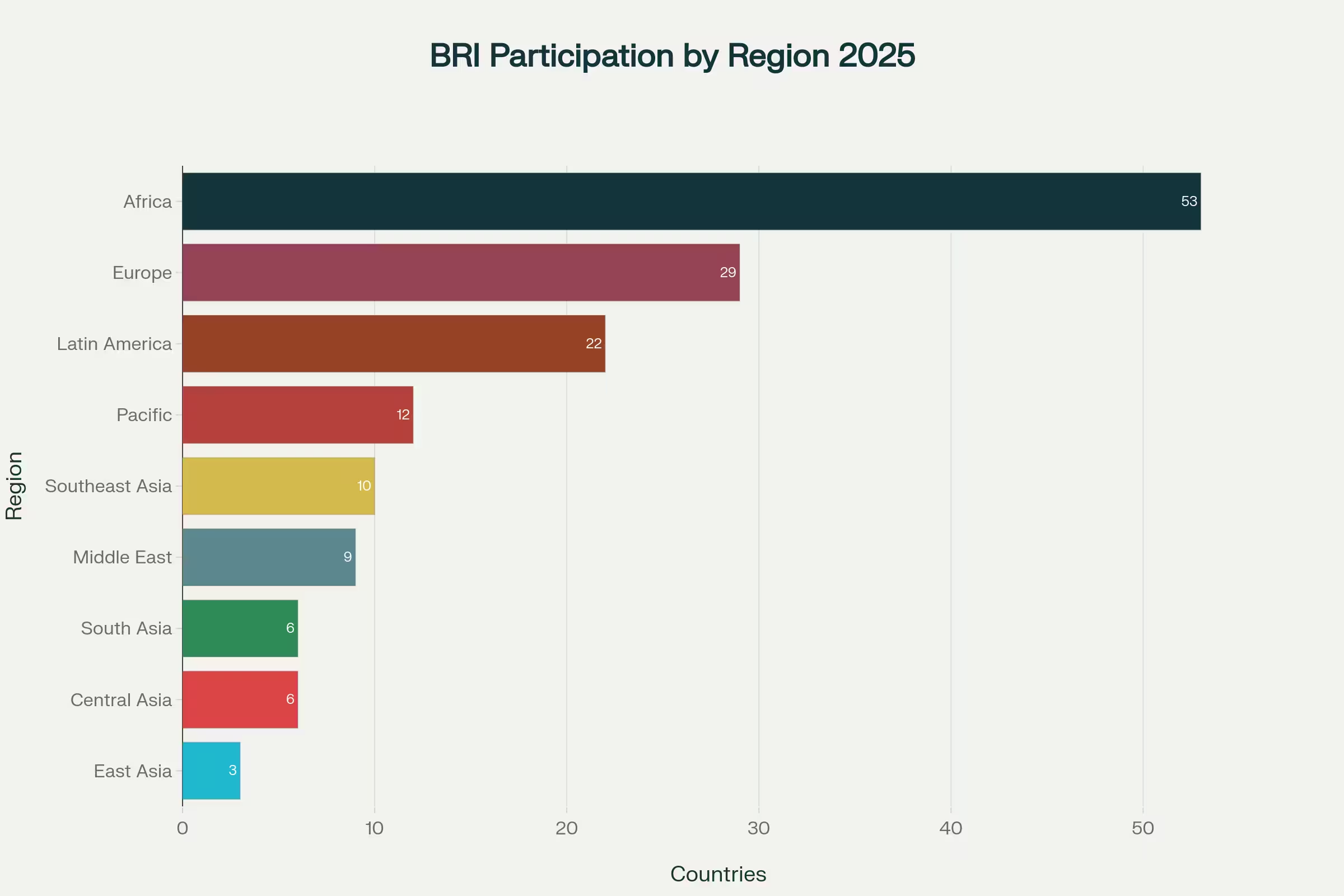
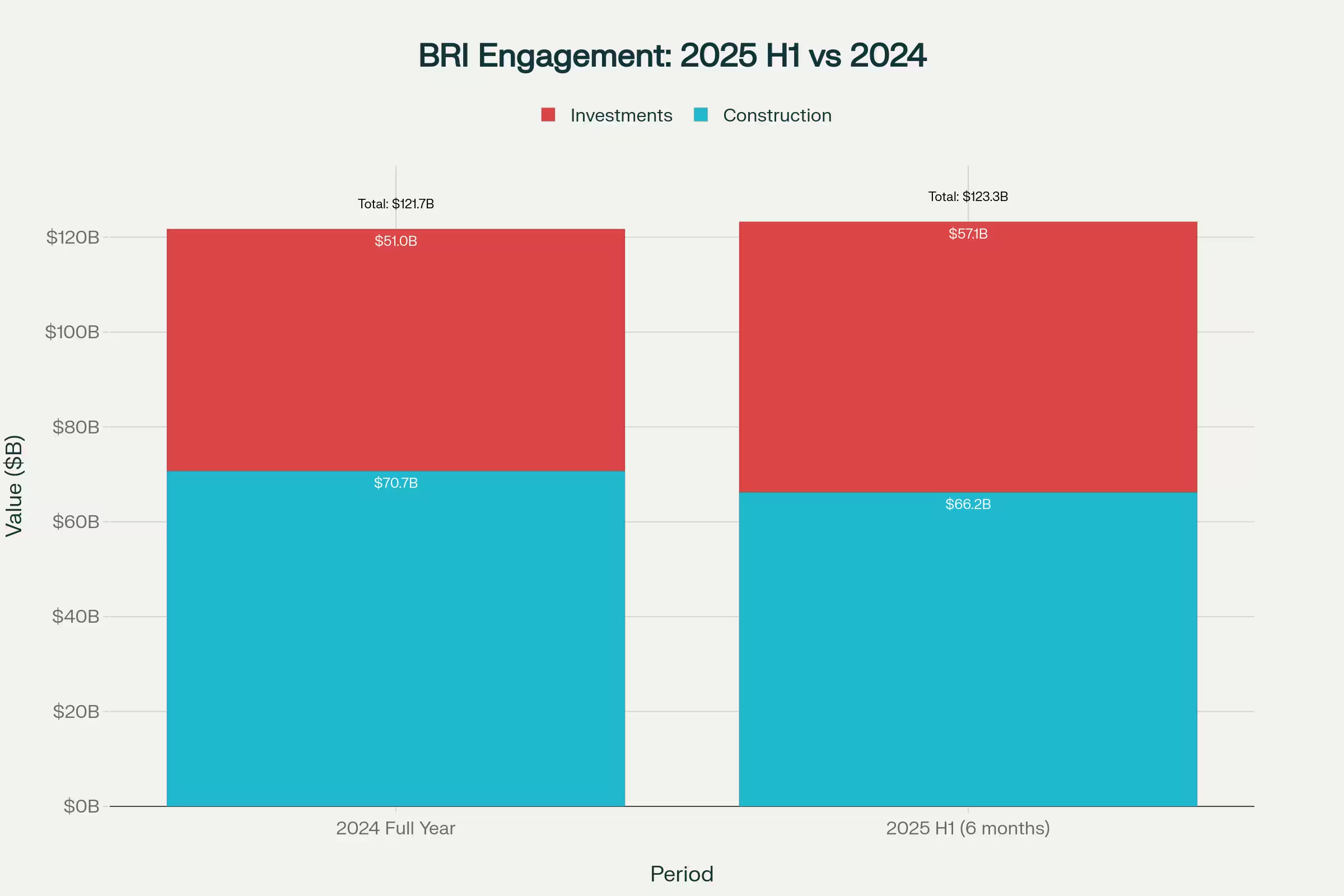
China’s military assertiveness cannot be understood in isolation from its economic grand strategy. For over a decade, the Belt and Road Initiative (BRI) has been the primary vehicle for projecting Chinese influence globally, with Beijing investing hundreds of billions in infrastructure projects across 166 countries. This “checkbook diplomacy” was instrumental in building goodwill and securing access to resources and markets, particularly in developing nations often overlooked by Western investors. It created a web of economic dependencies that has now become a foundation for China’s geopolitical ambitions.
However, this strategy has come at a significant cost. Many of these investments were made in politically unstable and corrupt nations, leaving China with a portfolio of high-risk loans and what may amount to massive, uncollectible debts. This reality, combined with a slowing domestic economy, has prompted a noticeable pivot in Beijing’s approach.
From “Sugar Daddy” Diplomacy to Strategic Marriages
The era of China acting as a no-strings-attached “sugar daddy” to the developing world appears to be drawing to a close. The country is transitioning from a strategy based on purely economic inducements to one that more closely resembles the American model of alliance-building, where economic aid is intertwined with security guarantees and political alignment. China is learning that leadership requires more than just capital; it requires a willingness to underwrite the security of its partners and, at times, to sacrifice short-term economic gain for long-term strategic advantage.
This evolution represents a maturation of Chinese foreign policy. The relationships it now seeks are less like transactional business deals and more like strategic marriages of convenience. It is moving from being a mere creditor to becoming a security patron for regimes that feel alienated by the West. This shift is a direct response to the changing geopolitical landscape, particularly the perceived decline of US reliability and the power vacuum it creates. The military hardware showcased in the parade serves as the muscle behind this new diplomatic posture, demonstrating that China has the means to protect its overseas interests and support its allies in a way it could not a decade ago.
A Clash of Ideologies? The West’s Crisis vs. China’s Vision
The emerging competition between the US-led order and the China-led bloc is often framed as a new Cold War, but the comparison is imperfect. While the Cold War was a stark clash between two opposing and universalist ideologies—capitalism and communism—the current contest is far more nebulous. The Western alliance system, for all its recent strains, is still fundamentally bound by a shared commitment to democratic values, human rights, and the rule of law.
Is the West Still United? The Impact of ‘America First’
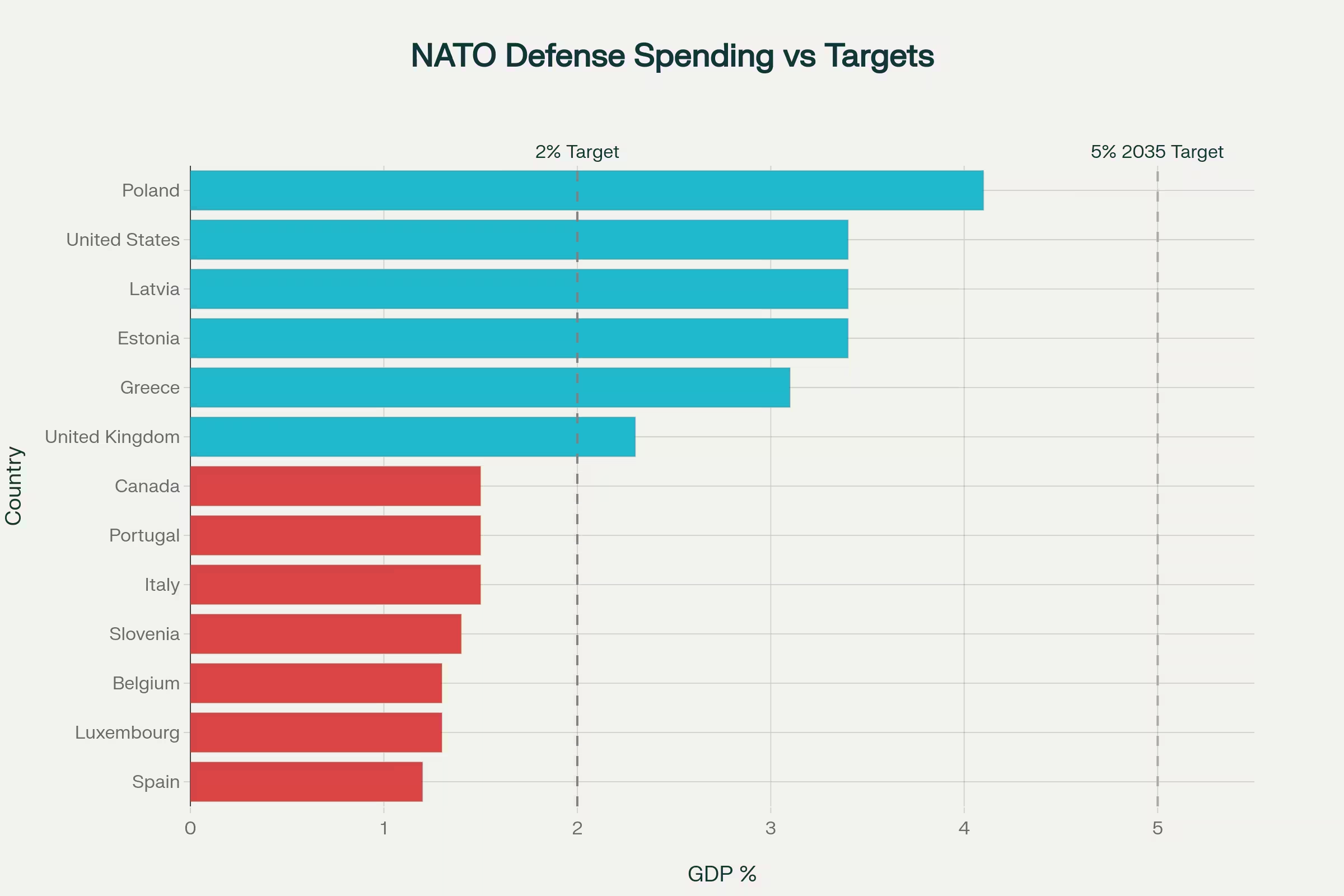
One of China’s greatest strategic advantages in recent years has been the disunity within the West. The “America First” posture of the Trump administration, characterized by trade wars against allies and skepticism toward longstanding security commitments, created deep fissures in the transatlantic relationship and sowed doubts about the reliability of American leadership. This has led to an identity crisis among many Western nations, prompting calls for “strategic autonomy” and a re-evaluation of dependencies on the United States. While there have been efforts to repair these alliances, the underlying trust has been eroded, creating a more permissive environment for both China and Russia to advance their interests. A divided West is less capable of mounting a coherent response to the systemic challenge that China poses, allowing Beijing to exploit disagreements on trade, technology, and security policy.
An Alliance Without a Soul: Can Anti-Americanism Alone Succeed?
In stark contrast, the coalition assembling around Beijing lacks any discernible unifying ideology beyond a shared opposition to US China relations and the current global order. It is a disparate collection of interests, encompassing Russian nationalism, Iranian theocracy, and China’s own brand of authoritarian “socialism with Chinese characteristics”. This lack of a shared positive vision represents the bloc’s most significant structural weakness. Alliances of convenience are notoriously fragile and transactional. History teaches us that they tend to fracture when the interests of their members diverge or when maintaining the alliance requires genuine sacrifice.
We have seen this play out in Russia’s wavering support for Iran, which fluctuates based on its immediate need for military hardware. The real test of this anti-US axis will not be in parades, but in crises. Can Beijing persuade its partners to act against their own narrow interests for the sake of a collective goal? Sustaining a global coalition requires more than a common enemy; it demands a compelling and shared vision for the future. As of now, it is unclear if “not being America” is a sufficient foundation upon which to build a stable and lasting new world order.
Conclusion: What is the Future of the Global Order?
The parade in Beijing was a powerful expression of China’s arrival as a top-tier military power. The technological advancements are real, the industrial capacity is immense, and the ambition is undeniable. Beijing has demonstrated that it possesses the hard power to challenge the United States’ primacy in the Indo-Pacific and to offer a security alternative to nations around the world. However, military might is only one component of global leadership. The ability to build and sustain a stable, cohesive, and effective alliance system is equally, if not more, important.
Herein lies the central paradox of China’s position. It projects immense strength and confidence, yet this is undermined by the inherent fragility of its coalition of convenience and persistent signs of internal instability, such as the recent purges within the PLA’s own leadership. An alliance built on transient, transactional interests and united only by resentment is a poor substitute for one built on shared values and decades of mutual trust. The future of the global order will likely be determined not by the nation with the most advanced missiles, but by the one that can offer the most compelling vision for shared prosperity and security. The challenge for American diplomacy is to reinvigorate its own alliances and prove that its model of leadership, based on partnership rather than dominance, remains the more attractive proposition for a world navigating an era of profound uncertainty.
The analysis presented herein constitutes a professional diplomatic evaluation based on open-source intelligence and evolving geopolitical trends in international security. These views are offered in a personal capacity and should not be construed as official government policy. A robust discussion on these critical regional dynamics and their consequences for global security is highly encouraged.